Help guide
Catalytic Converter Scrap Value: Why It Matters on a Junk Car
By Riverdale Cash For Junk Cars Inc. Published November 16, 2026, updated November 16, 2026.
What decides the catalytic converter scrap value on a junk car?
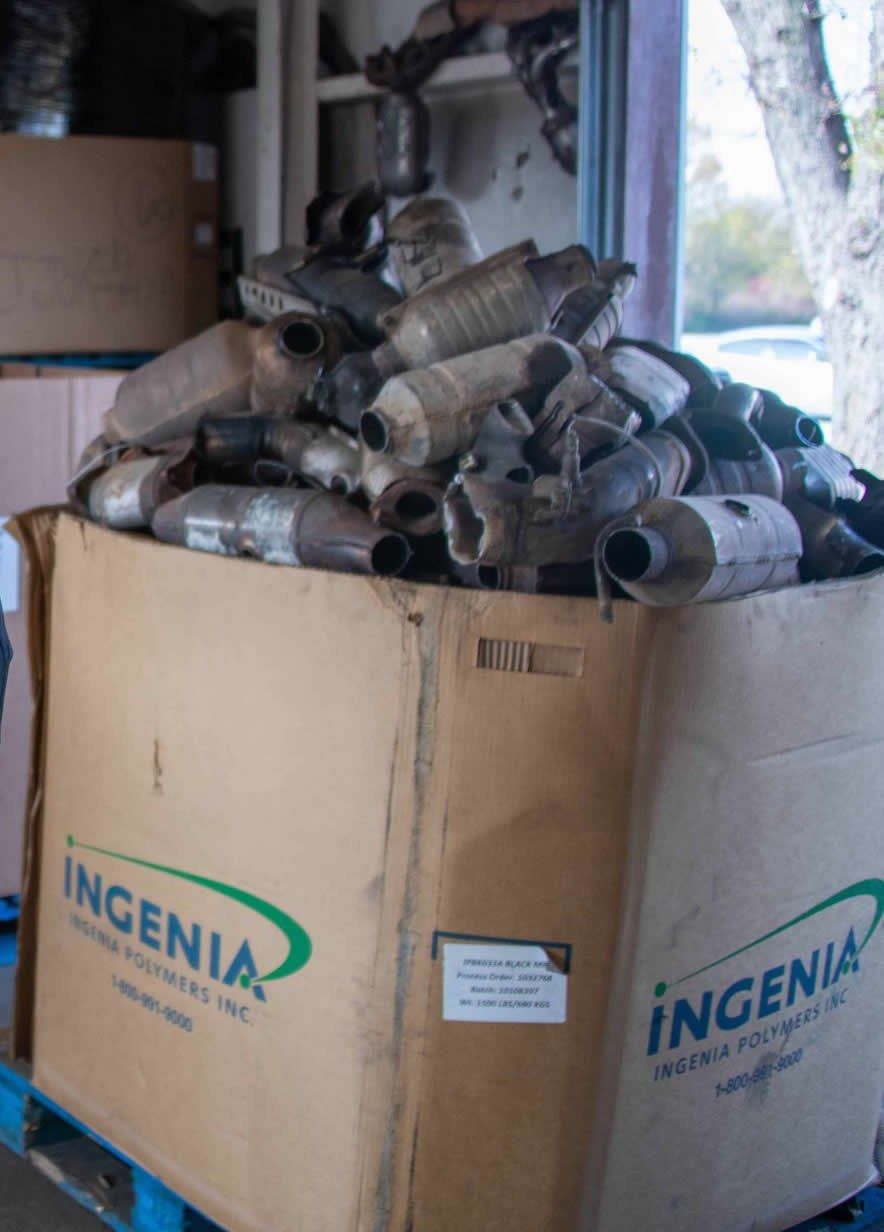
Catalytic converter scrap value comes from the precious metals coated inside the ceramic core, mainly platinum, palladium and rhodium, so it varies by converter type, size and condition and by metal markets. On a whole junk car, an intact original converter is one reason the offer is higher than for a stripped shell.
What a converter is and why it is worth anything
A catalytic converter is the canister in your exhaust that cleans up the gases coming from the engine. Inside, a ceramic or metal honeycomb is coated with a thin layer of platinum-group metals. Those metals are what a processor recovers. The steel shell and the exhaust pipe around it are the small part of the value.
That is why the converter is one of the first things people ask about when they junk a car, and why a car that is missing one feels different at pickup.
What moves the scrap value
No single number fits every converter. These are the factors that change it:
- The unit itself. Size, design and how much coating it carries. A converter from a large truck is a different thing from one on a small sedan.
- Original or aftermarket. Original-equipment units are often identified by a stamped part number. Aftermarket units are typically built to a different standard.
- Condition. A converter that is crushed, melted out or hollowed does not hold its metals.
- Metal markets. The three metals trade on markets, so recovery value moves over time. That is why we do not print dollar figures in a guide.
- Whether it is still on the car. A whole vehicle can be priced with the converter in place. A loose one starts a second set of questions.
On a whole junk car, the converter sits alongside weight, completeness, aluminum wheels, an engine and transmission, and how easily the car can be loaded. See what decides a junk car’s worth for the full list.
Illinois rules that touch converters
Illinois scrap rules were written around metals and vehicles, and they now reach converters directly. Here is what the reporting on the law says, and what to check yourself.
Records at the scrap yard. Under 625 ILCS 5/5-401.3, a scrap processor keeps records for three years. For recyclable metals worth $100 or more, the processor verifies the seller’s identity with a valid driver’s license or state ID, makes a color photocopy or scan of it, and does not complete the deal if the seller has no valid ID. Records have to be available to law enforcement. That section does not itself list converters.
The 2022 converter law. The recyclable metal purchase registration law, 815 ILCS 325, was amended in 2022 (Public Act 102-0906) to add rules on catalytic converter purchases. As news coverage of the law summarizes it, recyclers have to review and record the identification of converter sellers, log purchases electronically, and keep records for three years. A later bill, HB 4589, was reported to require recording the vehicle identification number and the converter’s part number. The final text of that later act should be checked against the current statute before you sell a loose converter.
What it means for you. If you sell a loose converter, expect to show ID and explain where it came from. If you sell a whole car with its title or other accepted ownership paper, the converter travels with the vehicle and the paperwork covers it. That is the cleaner route for most owners. For the document side of that, see how to junk a car in Illinois.
If your converter was stolen
Converter theft is common enough on the south side and in the south suburbs that many cars show up with the exhaust cut under the car. If yours was taken:
- File a police report. Keep the number.
- Photograph the cut pipes and any damage.
- Check your insurance. Some policies cover it, and a payout can change who owns the car. See salvage and rebuilt titles.
- Tell us when you ask for a pickup. A car with no converter still has weight and parts, it is just priced to match.
A running engine is not required. Cars that have lost a converter often run loud or poorly, and we buy non-running cars too.
Mistakes to avoid
- Selling the converter first and the car second. You lose value on the car and add paperwork on the part.
- Cash from a stranger at the curb. Someone offering to cut it off your parked car for a payment is a theft risk. Do not let them.
- Guessing the metal content from a forum post. Value depends on the unit and the market, not an average.
- Skipping the part number photo. If the converter is on the car, a photo of any stamping you can reach helps the quote.
Weight class matters too
Bigger engines and heavier vehicles generally carry bigger exhaust systems, and some vehicles have more than one converter. A pickup, van or full-size SUV may have several. Count what you can see under the car and tell us, since the number and type of converters changes how we think about the vehicle.
Next step
Riverdale Cash For Junk Cars Inc buys cars with and without their converters, with free towing and payment at pickup. Put the year, make, model, title status and whether the converter is intact into the quote form, and we call you back with the next step. If you drive a truck or van, our trucks, vans and SUVs page explains why larger vehicles carry larger exhaust parts.